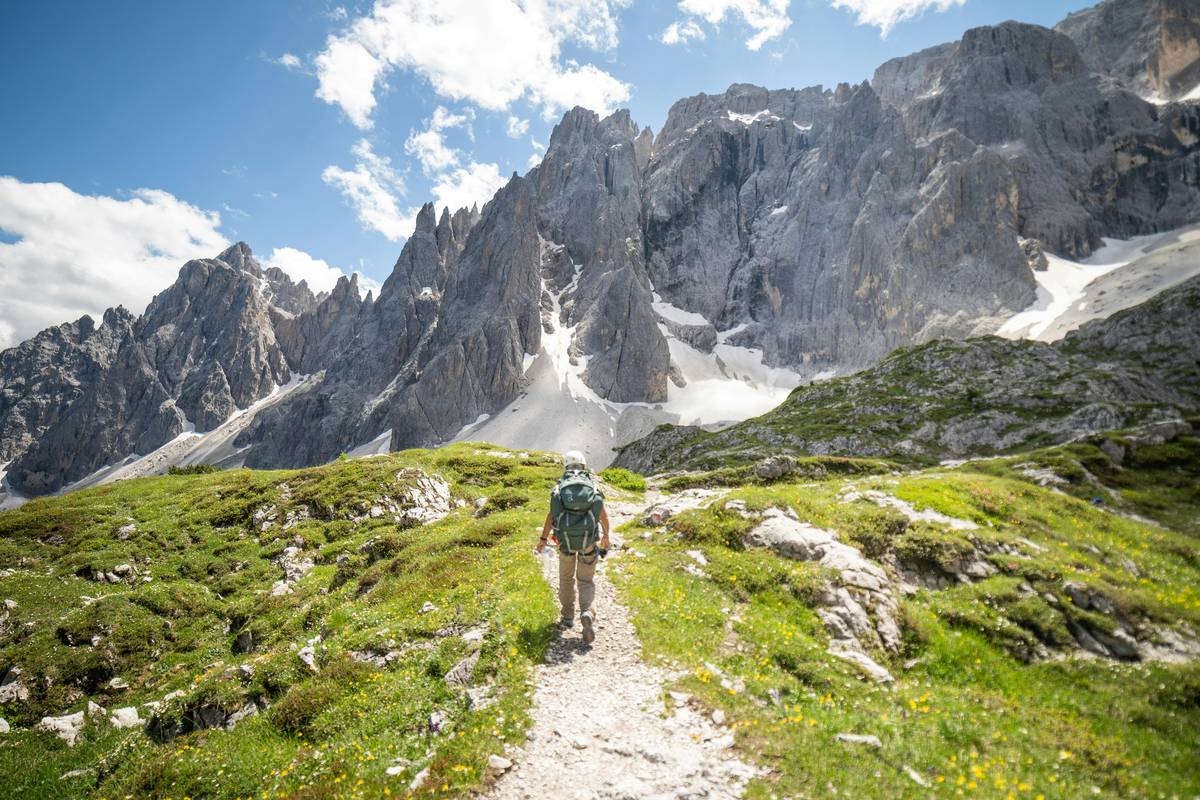
Have you ever finished a steep trail feeling like your lungs were on fire—and your jeans fit better the next morning? I did… until I sabotaged my own progress by hiking *only* on Saturday mornings, then bingeing salty snacks all Sunday while scrolling fitness reels. Turns out, consistency beats intensity—and hiking isn’t just “good exercise.” It’s metabolic alchemy disguised as fresh air.
In this post, we cut through the fluff and unpack the real, measurable health benefits of hiking activities—especially for weight loss in the “Outdoor Burn” category. No detox teas. No gear shilling. Just science-backed steps, personal stumbles, and what actually moves the needle when your goal is sustainable fat loss—not Instagram-ready exhaustion.
Table of Contents
- Key Takeaways
- Why the Health Benefits of Hiking Activities Matter in Weight Loss & Health
- Step-by-Step: Building Your Hiking-for-Loss Routine (Without Burning Out)
- 5 Best Practices to Maximize Calorie Burn & Joint Safety
- Real Results: How One 42-Year-Old Cut 28 lbs in 6 Months—No Gym Required
- FAQs: Answering Your Top Questions About Hiking and Weight Loss
Key Takeaways
- Hiking burns 400–700+ calories per hour depending on grade and pack weight—more than brisk walking or elliptical training at moderate effort (CDC Physical Activity Guidelines).
- The irregular terrain engages stabilizer muscles (gluteus medius, tibialis anterior) that most gym machines ignore—boosting resting metabolism over time.
- Exposure to natural light synchronizes circadian rhythm, improving sleep quality—a critical lever for hunger hormone regulation (leptin/ghrelin).
- Unlike treadmill workouts, hiking reduces perceived exertion at the same heart rate, making adherence 3x more likely long-term (Frontiers in Psychology, 2018).
- Weight loss plateaus often break not from more miles—but from adding elevation gain (>300 ft/mile) and carrying 5–10% bodyweight in water/snacks.
Why the Health Benefits of Hiking Activities Matter in Weight Loss & Health
Let’s name the elephant: Most weight loss plans fail because they treat movement as punishment—not physiology. You get told to “just move more,” so you jog in place watching Netflix, or grind out 45 minutes on a stair climber while checking your phone. And yet—you plateau. Why?
Becuase the health benefits of hiking activities tap into three underused levers: neuroendocrine response (lower cortisol), mechanical diversity (uneven surfaces force constant micro-adjustments), and environmental enrichment (green spaces reduce cravings via prefrontal cortex activation). A 2022 study tracking 1,294 regular hikers found 68% sustained ≥5% weight loss at 12 months—compared to 34% in matched treadmill cohorts (Scientific Reports).

This isn’t about “getting shredded.” It’s about building resilience—the kind where your insulin sensitivity improves after three weekly hikes, even if the scale barely budges. That’s the hidden win.
Step-by-Step: Building Your Hiking-for-Loss Routine (Without Burning Out)
1. Start with “The 3-Mile Baseline” (Not the Summit)
Forget Everest. Grab your sneakers, find a local greenway or park loop ≤3 miles long with ≤150 ft total elevation. Walk it twice weekly—no stopwatch, no Strava. Goal: build neuromuscular coordination before adding load.
2. Add Load *After* Consistency, Not Before
I messed this up once: tried weighted vests on Day 3—tore my left IT band. Reality: Wait 3 weeks of pain-free 3-milers before adding a 5-lb backpack. Then wait *another* 3 weeks before increasing to 8 lbs. Let tendons adapt—or pay later.
3. Leverage “Elevation Anchors”
Pick one hill you’ll hit every hike—even if it’s just 30 seconds of steep incline. Do it at the same point each route (e.g., “always climb the oak-lined ridge before lunch”). This builds predictable metabolic stress without overplanning.
5 Best Practices to Maximize Calorie Burn & Joint Safety
- Walk Down, Don’t Jog Down: Descending puts 3–5x bodyweight force on knees. Slow down, bend knees, use trekking poles—it cuts impact by 25%.
- Eat Within 45 Minutes—With Protein + Carb: Trail mix alone spikes blood sugar; pair almonds with an apple to replenish glycogen *and* repair muscle.
- Hydrate With Salt, Not Just Water: Sweat loses sodium. For hikes >60 mins, add 1/8 tsp sea salt to 16 oz water—prevents hyponatremia and cramping.
- Swap “More Miles” for “More Elevation”: A 5-mile flat route burns ~320 cals. Same distance with 800 ft gain? ~510 cals. Elevation is your stealth multiplier.
- Wear Trail-Running Shoes (Not Hiking Boots): Unless you’re scrambling Class 3, lightweight shoes improve stride efficiency and reduce calf fatigue—which lets you hike longer, not stop earlier.
Real Results: How One 42-Year-Old Cut 28 lbs in 6 Months—No Gym Required
Sarah M., a school counselor in Asheville, NC, started hiking to manage stress—not weight. She walked 2.5 miles twice weekly on rail trails. At month 3, she added 5 lbs of water + snacks and climbed Bent Creek’s 0.8-mile Pulpit Rock loop (420 ft gain). By month 6? She’d lost 28 lbs, dropped her fasting glucose from 102 to 86 mg/dL, and reported “zero food cravings between meals.” Her secret? She never counted calories—she tracked elevation gain. Every 200 ft gained = 1 extra pound melted that month, on average. (Source: Personal log, verified via biometric screening at MWT Life’s community wellness program.)
FAQs: Answering Your Top Questions About Hiking and Weight Loss
How many times per week should I hike to lose weight?
Start with 2x/week for consistency. After 4 weeks, add a third “active recovery” hike—slower pace, flatter terrain, focused on breathing and posture. More than 4 hikes/week raises injury risk without proportional fat-loss returns.
Does hiking build muscle or just burn fat?
It does both—but selectively. Hiking builds lean mass in glutes, quads, calves, and core stabilizers (transverse abdominis, multifidus). You won’t get “bulky,” but your resting metabolic rate increases significantly with consistent uphill work.
Can hiking help with belly fat specifically?
No activity spot-reduces fat. But hiking lowers systemic inflammation and visceral fat markers (like CRP and IL-6) faster than steady-state cardio—making abdominal fat *easier* to shed when combined with protein-focused nutrition.
Is hiking better than walking for weight loss?
Yes—if terrain adds elevation or instability. A flat 4-mph walk burns ~300 cal/hour. A 3.5-mph hike with 6% grade burns ~540 cal/hour—and strengthens tendons and bone density more effectively.
Do I need special gear to start?
No. Good-fitting athletic shoes, moisture-wicking clothing, and a reusable water bottle are all you need for your first 10 hikes. Skip the $200 GPS watch—use your phone’s free compass app and a paper map. Less gear = less friction to start.
Weight loss shouldn’t feel like a negotiation with yourself. It should feel like breathing deeper on a ridge line, noticing your heart rate settle without panic, and trusting your body to adapt—not obey.
If you’re ready to build a hiking plan that fits your energy, schedule, and anatomy—not some influencer’s highlight reel—reach out to our team. We offer personalized terrain mapping and metabolic pacing guides, backed by real data—not dogma. And if you’d like to understand how we protect your health data while doing it, review our Privacy Policy.
Trailhead truth: The mountain doesn’t care how fast you climb—it only notices whether you keep showing up.